
Holding Cell Release Paths
The Edwards County Sheriff’s Office holding cell is a temporary processing and holding location. It is not a conventional county jail. The Illinois Sheriffs’ Association Edwards County profile identifies one holding cell and states that the county has no jail. A person can leave this cell through a local release authorized by the court or another lawful disposition. The sheriff may instead transport the person to White County Jail, which houses Edwards prisoners by contract.
Those outcomes must not be collapsed into one kind of release. A local departure to the community and a transport to another custodian both end the person’s presence in the holding cell, but only the first ends physical custody. The Edwards departure record should identify the time, authority, and destination. When White County receives the person, its admission record continues the chain.
Review the official association profile for the Edwards holding arrangement.
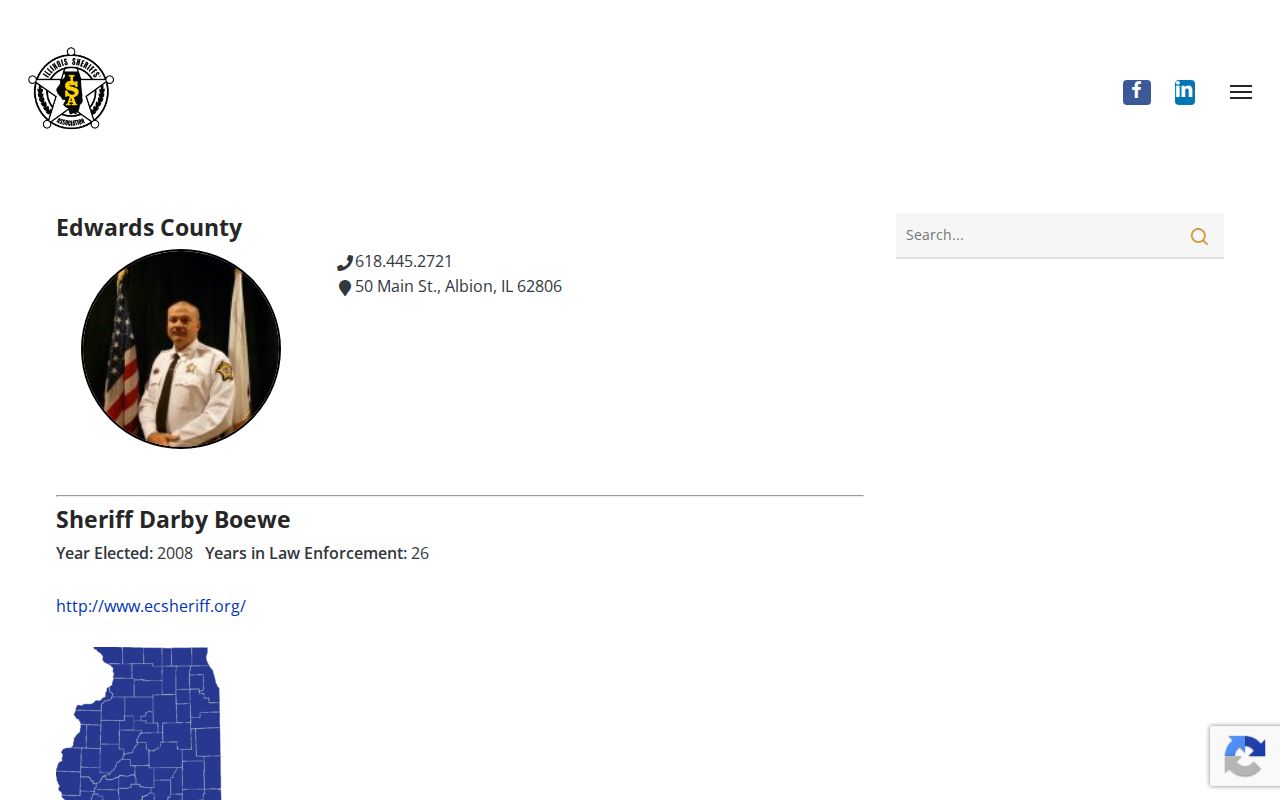
The source confirms why an Edwards release search begins with the sheriff rather than a county-jail roster.
Confirm Holding Cell Releases
Start with a full name, birth date if known, approximate arrest date, and Edwards case number. Names alone can connect the wrong person to a custody event. The sheriff’s record is the primary source for whether the person was processed, released locally, or transported. Ask a precise question: did the person return to the community, or did another agency assume custody?
- Search the Edwards Circuit Clerk court-access page and the Edwards-specific docket for the order or disposition.
- Contact the Edwards Sheriff for arrival, processing, departure, authority, and transport details.
- If the record names White County Jail, confirm the matching admission with White County and continue the search there.
- If it names IDOC, USMS, another county, or ICE, follow the receiving system rather than treating the event as community release.
- Pair the signed order with the actual departure transaction when exact timing matters.
The complete Edwards County released inmate search explains how current custody, court, state, and federal sources fit together. Judici is useful for online access, but certified orders come from the Circuit Clerk. A court order may predate physical departure while staff check holds and finish processing.
Holding Cell Records Contact
The sheriff is the record source for local holding, processing, release, and transport. The official association profile lists Sheriff Darby Boewe and the contact details below. Office holders and routing can change, so confirm the current contact on the live official page. No source documented public release-processing hours, a release door, or a waiting location.
50 Main Street
Albion, IL 62806
618-445-2721
Call for current records routing
Ask for the existing booking or intake record and the release or transfer transaction. Useful requested fields include arrival and departure timestamps, release authority or disposition, any pending hold, the receiving agency, transport information, and a processing photograph if one was created. A photograph should be requested separately so a photo question does not delay the core custody record.
Cell Departure or White Transfer?
Edwards County’s single-cell structure creates a distinctive false-release risk. Departure from the holding cell may be transport to White County Jail, not freedom from custody. The best proof combines the Edwards departure timestamp and destination with White County’s admission timestamp. That pair shows an uninterrupted transfer even though the person vanished from the local holding location.
If the sheriff reports a local community release, obtain the authority and actual time. If the sheriff reports transport, ask for the receiving agency and continue there. A later White departure can itself be community release or another transfer. Each handoff needs its own record.
Request Holding Cell Records
Illinois FOIA, 5 ILCS 140, provides the public-record request framework. A focused request should name the person and known aliases, supply a narrow date range and case number, and identify the existing records sought. Ask for electronic delivery, a fee estimate before chargeable copies, and production of nonexempt portions after lawful redaction.
Section 3(d) generally provides five business days for a response to a noncommercial request, subject to statutory extension circumstances. That is not a promise that production will be complete in five days. Security, medical, juvenile, personal-privacy, sealed, expunged, and active-investigation material may be withheld under applicable law. A written denial should state its basis and review route.
If the sheriff reports no responsive record, ask whether White County owns it, whether the person was recorded under a variant name or number, and whether an approved retention schedule applies. Removal from a website is not proof that an underlying record was destroyed.
Holding Cell Release Fields
No public Edwards release-feed schema was found. The following inventory is a request target, not a promise that every field exists or is public.
| Field | Purpose |
|---|---|
| Identity and local number | Matches the event to the correct person. |
| Arrival and departure time | Defines the temporary local custody period. |
| Authority or disposition | Explains the legal basis for departure. |
| Receiving agency | Separates community release from transport. |
| Hold information | Shows whether another matter affected departure. |
| Property or photo record | Documents closeout or identity materials if created. |
A release record and a court order answer different questions. The court supplies legal authority. The sheriff records when staff acted and where the person went. Both should be kept with the retrieval date.
After an Edwards Transfer
If White County later transfers the person to IDOC, use the IDOC Individual in Custody Search. Match the state profile through IDOC number, date of birth, Edwards sentencing county, and mittimus. IN CUSTODY reports state physical custody. PAROLE indicates release from prison to active state supervision. A projected parole date is not proof that release occurred, and a fully discharged person may stop appearing.
The state profile can show admission, parent institution, location, Last Paroled Date, Projected Parole Date, Projected Discharge Date, and sentencing rows. These labels answer different questions. Admission begins the IDOC period, while Edwards arrest and holding dates belong to the local record. A parole district is a supervision location, not a residence. If an Edwards commitment is established but the public search later gives no match, use the court file and an IDOC records request. Completed sentence and parole are among the search system’s stated no-result reasons.
A transfer to USMS is federal custody even when BOP has no match during pretrial processing. Follow the federal court and Marshals route. Use the BOP Inmate Locator for documented federal prison custody. An ICE disposition is a transfer to civil immigration custody; the ICE locator is separate and may not update at once. Protect sensitive identifiers.
Illinois VINELink can add notifications while a matching participating record is active. Register only after confirming the person and jurisdiction. A VINE event describes the reporting agency’s status but may not explain authority or destination, so compare it with the sheriff’s record. A missing result can reflect identity, coverage, or update timing and does not prove that the person was never held.
Note: A receiving-system delay is not proof that the person returned to the community.